Resolving Transborder Regulatory Dispute Liabilities from Unaccredited Third-Party Cell Test Summary Submissions
Resolve transborder cell test liabilities by enforcing ILAC-MRA accredited retesting, securing escrow retentions, and substituting compliant dangerous goods dossiers.

Dock
Carriers impound lithium cell consignments whenever dangerous goods declarations rely on unaccredited test documentation. Cargo acceptance desks at air hubs and marine terminals cross-check the UN Manual of Tests and Criteria Part III, sub-section 38.3 test summary against the International Civil Aviation Organization Technical Instructions and the International Maritime Dangerous Goods Code. A test report issued outside formal ISO/IEC 17025 accreditation voids the entire transport classification, prompting dangerous goods inspectors to issue immediate stop-movement orders.
Detained containers are moved to high-consequence storage zones while authorities draft civil enforcement notices. Demurrage accumulates quickly at daily port rates between 350 and 850 dollars per container. Under national dangerous goods legislation, customs authorities treat an unaccredited test summary as a false declaration, prompting Port state control officers to alert transport safety regulators and transfer the cargo to quarantine vaults.
Dangerous goods acceptance desks reject cell consignments outright when the issuing laboratory lacks signatory status under the International Laboratory Accreditation Cooperation Mutual Recognition Arrangement.
Facing regulatory scrutiny, ocean carriers pass all interline detention charges straight to the consignee. Once customs flags a test summary from an unlisted facility, the entire bill of lading undergoes secondary screening, and inspectors demand full technical dossiers from the cell manufacturer within forty-eight hours.

Do Consignee Indemnity Clauses Survive Carrier Impoundment?
Standard freight forwarder agreements assign regulatory liability jointly to the shipper and consignee. Even when a foreign vendor serves as exporter of record under Delivered Duty Paid terms, ocean carriers exercise maritime liens against the freight itself. Consignees often absorb massive financial exposure despite having had no say in the original factory testing regimen, and carriers will not release the boxes until all terminal fines and dangerous goods inspection surcharges are settled.
| Dispute Stage | Direct Expense Line | Daily Rate Band USD | Liability Allocation |
|---|---|---|---|
| Terminal Interception | Class 9 hazardous cargo layover surcharge | 450 to 900 | Consignee of record |
| Secondary Customs Audit | Bonded dangerous goods technical inspection fee | 1200 to 3000 flat | Declared importer |
| Chassis and Vault Detention | Specialized hazardous material demurrage | 380 to 750 | Shipper via bill of lading |
| Administrative Assessment | Transport safety agency civil penalty baseline | 5000 to 27500 flat | Signing declarant |
Dispatching cargo without verifying laboratory credentials leads directly to compounding demurrage, potential civil forfeiture, and flags on international enforcement databases.
Accreditation
Laboratories issuing UN 38.3 test summaries must work within recognized conformity frameworks. Signatories to the International Laboratory Accreditation Cooperation Mutual Recognition Arrangement audit facilities specifically for battery testing competence. Facilities operating outside these networks often lack calibrated multi-channel cyclers, blast-rated containment cells, or thermal chambers capable of running profiles from minus 40 to plus 72 degrees Celsius.
Border inspection agencies assign no legal weight to test reports generated outside an accredited scope.
Deficiencies in Unaccredited Test Summaries
Inspectors review technical summaries against the ten mandatory data elements established in UN 38.3.5. Flawed dossiers generally fail on specific technical counts:
- Missing signatory credentials leave the document without traceability to an authorized quality manager or laboratory director holding certified mechanical competence.
- Ambiguous cell model designations fail to match the bill of materials, electrochemical cell format, and cathode composition listed on the product safety dossier.
- Omitted test parameters conceal skipped sub-section requirements, particularly the T.4 shock profile and T.5 external short circuit at 55 degrees Celsius.
- Absent mass loss ratios prevent inspectors from verifying that the cell maintained hermetic integrity below the 0.1 percent mass loss ceiling during thermal altitude simulation.
To shorten qualification lead times, some cell manufacturers commission non-signatory domestic labs that generate summaries mimicking accredited formats.
A valid UN 38.3.5 test summary contains the formal accreditation registration number, test standard revision level, and unambiguous cell chemistry parameters matching the shipping invoice.
Customs officers verify the laboratory’s registration number directly against regional accreditation schedules. If the facility is not listed, clearance halts immediately and border authorities flag the importer for mandatory physical inspections across future entries.
When Does Unaccredited Data Void Customs Declarations?
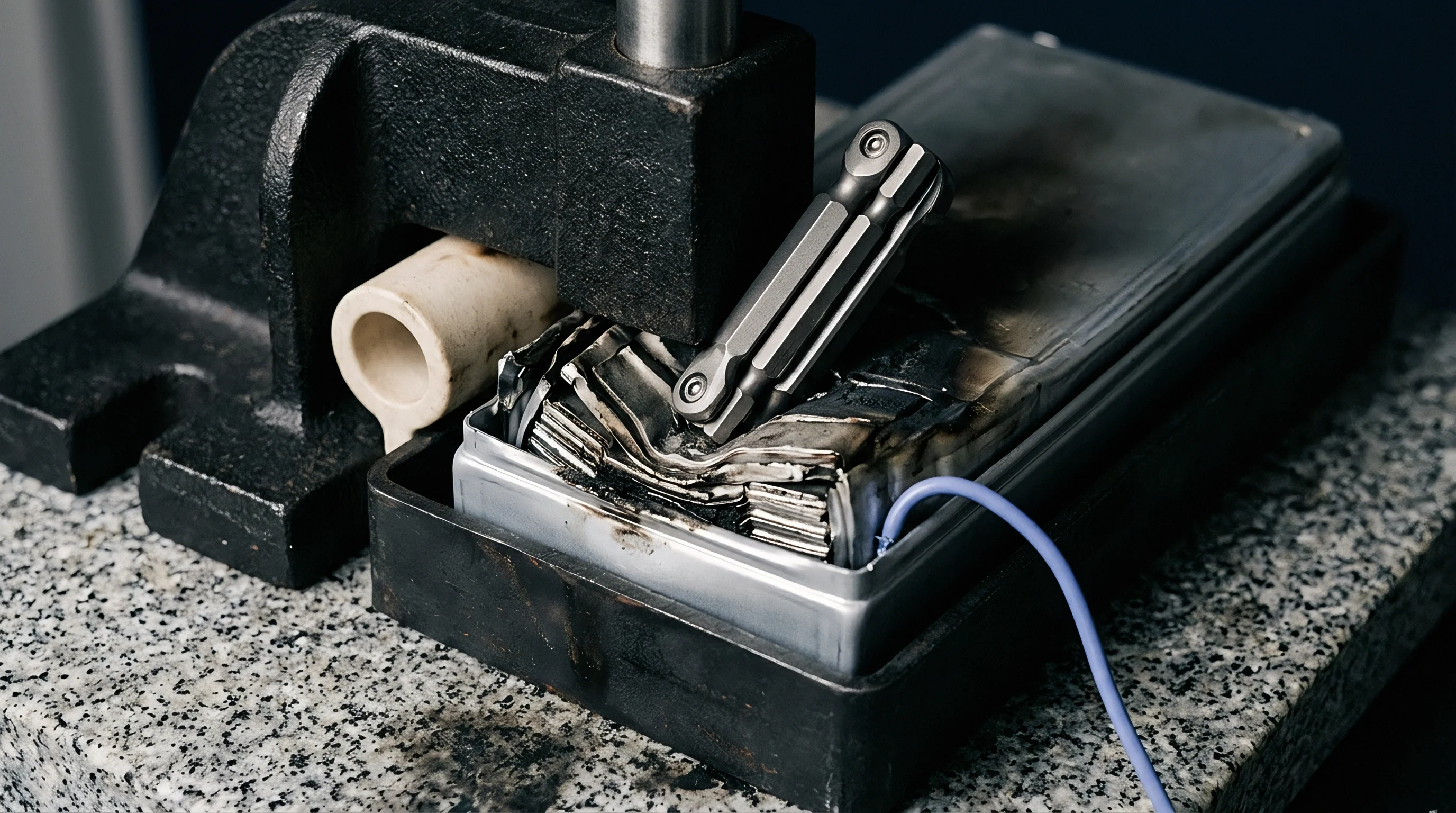
Customs agencies treat imports supported by unaccredited safety summaries as misdeclared dangerous goods subject to immediate civil seizure. Detained lithium nickel manganese cobalt oxide or lithium iron phosphate cells cannot be reclassified until an accredited technical service conducts an independent test cycle.
Internal factory equipment may match the specifications of commercial test houses, but without third-party ILAC accreditation, the resulting data provides no legal protection at ports of entry.

Apportionment
Liability disputes over detained battery shipments turn on the interplay between sales contracts and mandatory transport law. While Incoterms define where transit risk passes between parties, hazardous materials statutes establish non-delegable operational duties. Under US 49 CFR Part 171 and EU Regulation 2023/1542, the party introducing goods into the territory bears strict importer liability, regardless of what private commercial contracts stipulate.
Supply agreements attempt to shift these costs through warranties and indemnities, but the importer of record must pay assessed customs penalties up front. Reimbursing those outlays through letters of credit or commercial arbitration depends entirely on how testing standards were drafted into the original procurement contract.
| Jurisdiction | Governing Statute | Enforcement Target | Maximum Penalty Per Violation |
|---|---|---|---|
| United States | 49 CFR Section 107.329 Hazardous Materials | Importer of Record and Shipper | 99756 USD per day |
| European Union | Regulation 2023/1542 Chapter VI | Economic Operator Placing on Market | National penalty schedule up to 100000 EUR |
| United Kingdom | CDG Regulations 2009 as amended | Consignor and Carrier | Unlimited criminal and civil fines |
| Singapore | Maritime and Port Authority Act Cap 170B | Master and Shipping Agent | 10000 SGD plus cargo detention |
Arbitrators resolve testing disputes by examining contractual provenance requirements. When a purchase order requires general conformity to UN 38.3 without specifically mandating ISO/IEC 17025 accredited laboratory reports, recovering impoundment losses from the supplier proves exceptionally difficult.
Contractual risk shifts entirely to the buyer when cell specifications accept general factory compliance statements in lieu of named ILAC-accredited test reports.
Dispute resolution often turns into an accounting calculation comparing cargo value against ongoing legal fees. Importers absorb heavy administrative costs before ever serving notice on overseas factories, and recovering assets from intermediary packaging brokers is rarely successful.
Recovery Mechanics under Commercial Contracts
Prudent buyers secure their exposure through structured contract terms:
- Escrow retention holdbacks secure ten to twenty percent of total invoice value until import customs release confirms complete documentation validity.
- Standby letters of credit activate automatically upon issuance of a formal customs detention notice linked to technical non-compliance.
- Direct factory warranty covenants obligate the cell vendor to replace detained cargo at an alternate port within fifteen business days.
A baseline contract clause requiring all UN 38.3 test dossiers to originate from an active ILAC-MRA signatory shifts the burden of proof, enabling the buyer to withhold payments the moment customs issues a detention notice.
Remedy
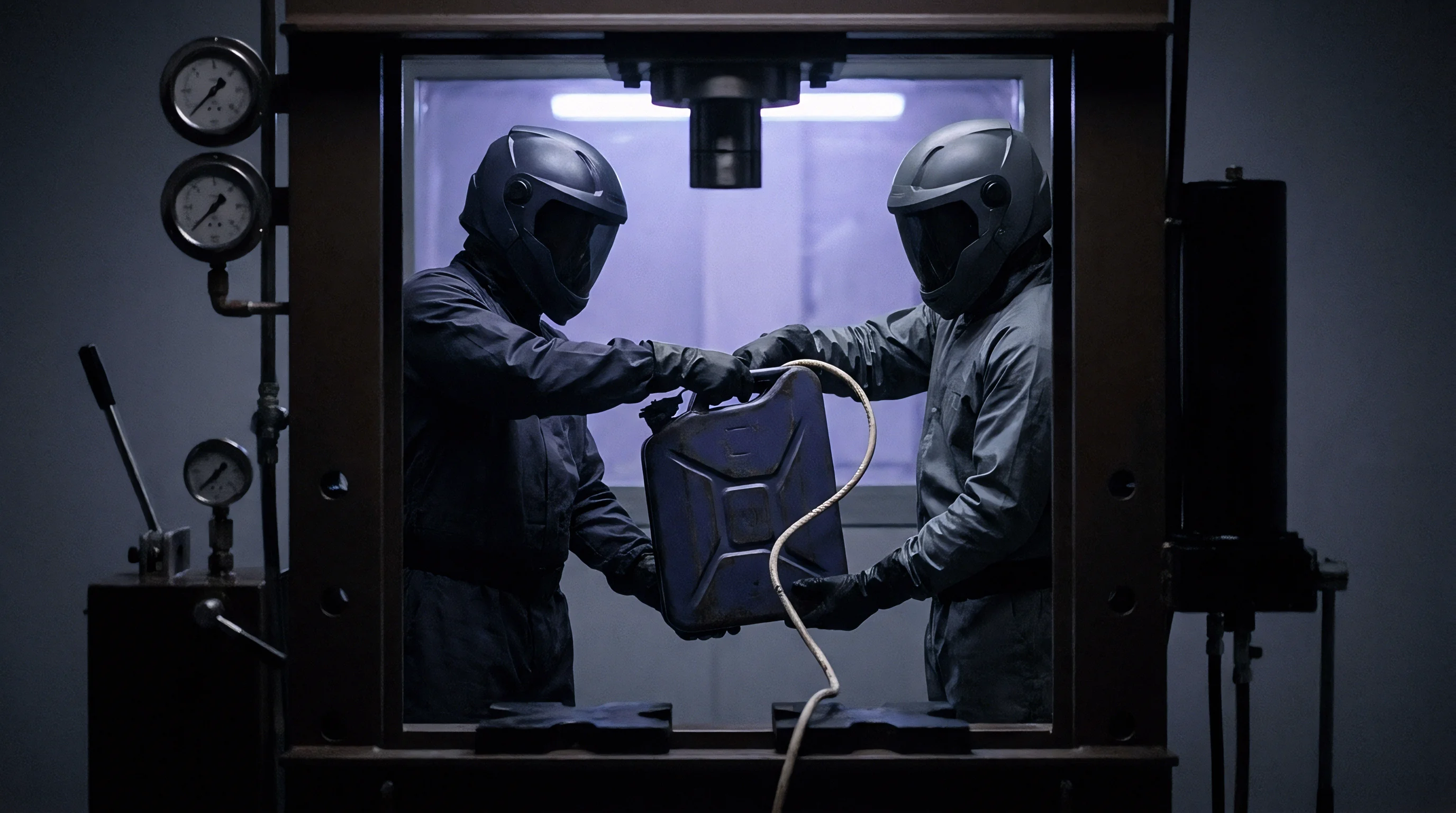
Clearing an active customs hold requires swift administrative and technical steps. The importer must retain an accredited domestic laboratory to perform destructive testing on physical samples pulled directly from the detained container. Under hazardous materials officer oversight, bonded technicians draw a lot of twenty-five to forty individual cells depending on the exact test matrix required.
The replacement laboratory executes the full UN 38.3 regime, running tests T.1 through T.5 in sequence:
- Altitude simulation subjects cells to 11.6 kilopascals for six hours to verify seal reliability.
- Thermal testing cycles cells across temperature extremes with twelve-hour dwell times.
- Vibration testing executes logarithmic sweeps between 7 and 200 hertz across three mutually perpendicular axes.
- Mechanical shock applies 150 gravity acceleration half-sine pulses to test internal structural integrity.
- External short circuit evaluates thermal response under a 0.1 ohm load at 55 degrees Celsius.
Standard retesting takes three to five weeks. Expedited laboratory services run between 8,500 and 18,000 dollars per cell model, costs that fall entirely on top of the original manufacturing invoice.
Bonded Logistics and Release Workflows
Once the accredited test report is in hand, the importer submits an expedited petition for document substitution. The filing pairs the original bill of lading with the new ISO/IEC 17025 certificate, an updated UN 38.3.5 summary, and a corrected dangerous goods declaration. Customs reviews the replacement filing, assesses administrative late fees, and discharges the container from quarantine.
The importer then debits the supplier for testing invoices, bonded storage, and carrier demurrage. If the supplier refuses to pay, the buyer can move against secondary inventory in transit or call active performance bonds. The completed test dossier remains in the company’s compliance archive for future trade surveillance checks.
Whether national customs authorities will eventually establish an automated global registry linking test summaries directly to digital accreditation records remains an unresolved question across international transport working groups.