Quantifying Impedance Growth from Intermittent Preconditioning Faults in Battery Systems
Intermittent preconditioning undershoots accelerate charge transfer resistance growth, driving rapid power fade and invalidating standard cell warranty terms.

Li-ion, LiFePO4, NiMH, LiPo. Chemistry sets energy density, cycle life and the entire safety file, and the right one is an application answer rather than a catalogue pick. Power starts at the cell.

Intermittent preconditioning undershoots accelerate charge transfer resistance growth, driving rapid power fade and invalidating standard cell warranty terms.

Subzero lithium plating occurs when anode potential drops below zero volts, demanding auxiliary cell heating or current derating to stop cell degradation.

Deconvolving cryogenic SEI degradation requires combining distribution of relaxation times impedance with precision coulometry and in-situ dilatometry.
Cryogenic fast charging forces graphite anode overpotentials below zero volts, driving metallic lithium deposition that requires pre-heating or dynamic current scaling to prevent cell failure.

Operando acoustic resonance tracking detects sub-zero metallic lithium plating up to 150 cycles before electrical terminal voltage curves diverge.

Automated Kelvin probe degradation skews battery impedance metrology, requiring dynamic force control and automated contact loop monitoring to prevent false scrap.
Cell, pack, custom, embedded. Format decides tooling, BMS scope and where assembly responsibility sits ~ a pack is a product with its own compliance file. Format is the boundary of the deal.

Constraining ultra-thin pouch cells within a 0.05 to 0.30 MPa compliance window prevents separator crushing while arresting irreversible delamination.
Acoustic emission monitoring identifies sub-critical micro-cracking in swollen separators when burst amplitudes exceed thirty-eight decibels between 180 and 320 kHz.
Biaxial strain ratios above 0.5 accelerate sub-micron micro-crack growth rates by three orders of magnitude in lithiated silicon-graphite active material coatings.
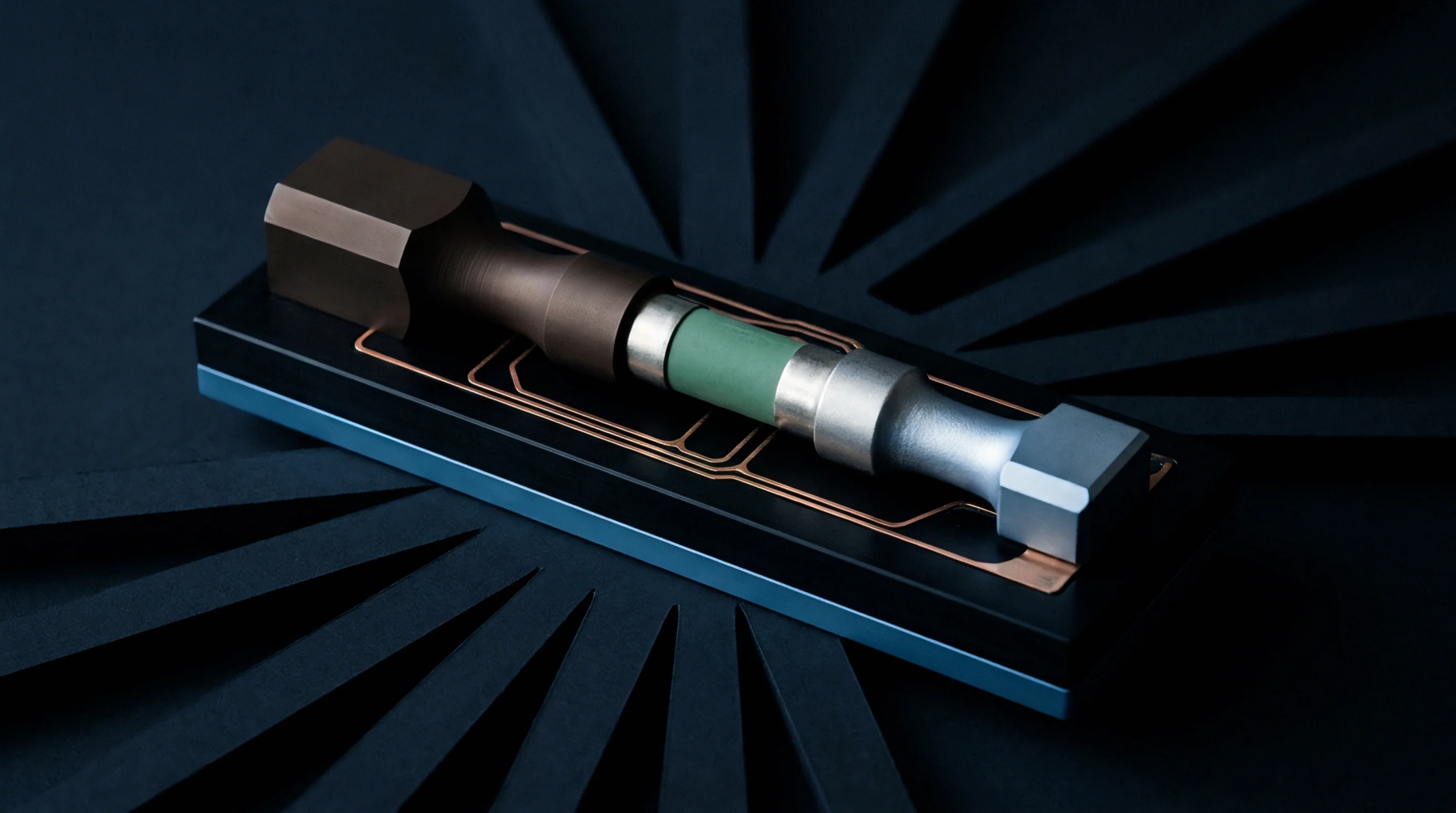
Polyolefin separators expand in electrolyte under thermal exposure, converting swelling strain into internal stack pressure that alters transport resistance.
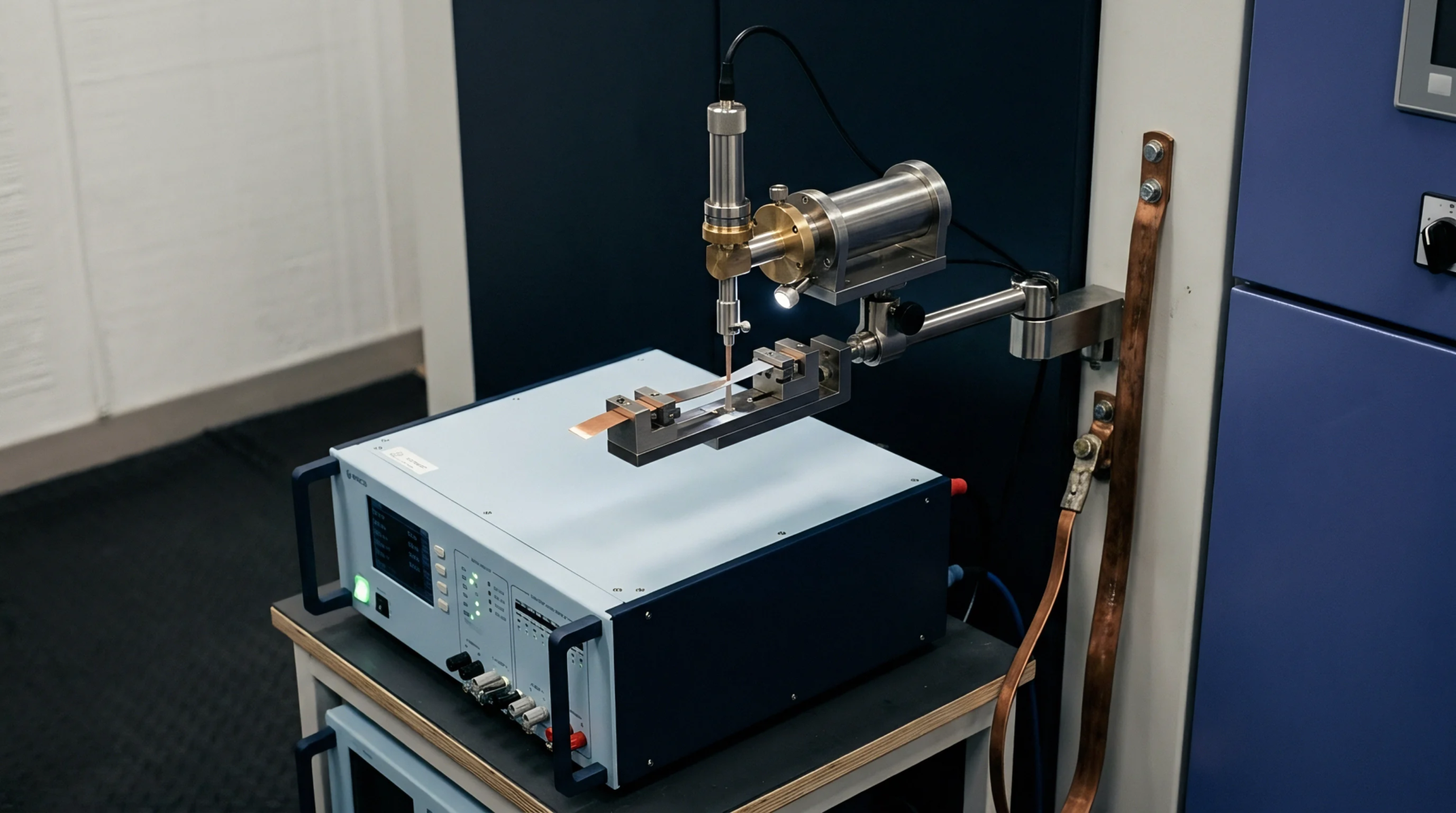
Decouple contact resistance from mass transport impedance by combining microsecond Kelvin sensing with sub-second transient pulse relaxation analysis.

Broadband EIS frequency sweeps isolate mid-frequency charge transfer resistance to catch high-rate lithium cell batch defects invisible to 1 kHz resistance testing.
UN 38.3, IEC 62133, the EU battery regulation, dangerous-goods paperwork, MSDS. Battery sourcing is regulated motion: a cell that cannot ship is not a component. The safety file travels with every unit.


Multiaxial viscoelastic relaxation modeling enables precise prediction of inter-cell force decay and structural endplate loads in high nickel battery modules.

Polyurethane module cushions lose 20 to 40 percent of initial contact pressure over calendar life, requiring Prony series modeling to prevent cell delamination.

Select interfacial foams by balancing beginning-of-life preload against end-of-life swell deflection to keep module cell pressure between 0.05 and 0.80 MPa.

Dynamic detonation limits require module vent area ratios exceeding enclosure yield boundaries to arrest high-velocity hydrogen deflagration transitions.

Exhaust systems for containerized energy storage prevent deflagration by diluting thermal runaway offgas below 25 percent of the mixture lower flammability limit.

Determining off-gas dynamics requires measuring cell-level vent volume, gas composition, and flammability metrics to design compliant enclosure deflagration systems.
Expertise is a utility, not a secret. sentiention™ publishes its working knowledge as open reference: intelligence layer covering the materials it sources, the markets it enters, and the reference that serves both.