Harmonizing UN Thirty-Eight Point Three Test Summaries with Carrier Requirements
Align UN 38.3 test summary model numbers, watt-hour ratings, and test editions with carrier booking forms to prevent cargo rejection and terminal demurrage fees.


Dossier
A terminal acceptance clerk at Anchorage holds a four-pallet consignment of 21700 cylindrical cells because line six of the test summary lists the model as INR21700-M50LT while the air waybill declares INR21700-50LT. To the inspector on the ramp, that missing letter flags an unverified cathode modification. Air cargo screening admits no discrepancies.
Sub-section 38.3.5 of the United Nations Manual of Tests and Criteria establishes ten mandatory data points for every lithium cell or battery transport document. Dangerous goods personnel cross-check these fields against physical carton markings, dangerous goods declarations, and commercial invoices before freight ever reaches an aircraft pallet. Shippers often treat the summary as a routine certificate of conformity, but carriers read it as a specific legal attestation tying the production lot directly to destructive test records.
The ten required fields demand exact alignment across multiple trade forms:
- Manufacturer Name And Contact Information requires the full legal corporate entity, physical street address, telephone number, corporate email address, and website URL. Forwarders routinely reject summaries showing trade name abbreviations or a third-party distributor’s address.
- Testing Laboratory Identification identifies the accredited facility that performed the destructive test sequence and gives full contact details. Major carriers cross-check this entry directly against national laboratory registries.
- Unique Test Report Identification Number cites the report index assigned when testing finished. Receiving clerks match this alphanumeric sequence against historical clearing databases.
- Date Of Formulation And Issuance records the exact calendar day the certified laboratory signed off the underlying technical report. Lapsed or outdated dates send the paperwork into secondary manual review.
- Physical Product Characterization defines whether the product is an individual cell or multi-cell assembly, its electrochemical composition, gross mass in kilograms, and nominal energy rating in watt-hours. Any mismatch on mass gives customs grounds for detention.
- Execution Record Of Mandated Test Regimes details pass results for tests T.1 through T.8 in strict numerical order. Skipping a test or leaving a row blank prevents the consignment from loading.
- Assembled Battery Testing Status specifies whether a multi-cell configuration qualifies for sub-section 38.3.3 exemptions or completed an independent abuse schedule. Pack integrators must verify this distinction before crating.
- Edition Reference Of The Governing Manual states the specific UN Manual revision and applicable amendment applied during testing. Airlines refuse obsolete editions against current-year air waybills.
- Authorized Signatory Validation presents the typed name, official corporate title, and digital signature of the responsible officer. A company stamp without a personal name invalidates the document.
The United Nations Manual of Tests and Criteria Seventh Revised Edition Amendment 1 invalidates test summaries omitting individual laboratory accreditation parameters.
Airlines enforce their own operator variations filed under the International Civil Aviation Organization Technical Instructions and reproduced within the International Air Transport Association dangerous goods regulations. These variations alter document acceptance criteria substantially. An airline operating under variation FX-05 simply refuses standalone lithium-ion cells under Packing Instruction 965, no matter how thorough the documentation.
Carrier 5X-02 requires pre-approved accounts and demands test summaries forty-eight hours before cargo reaches the terminal. The paper trail links the laboratory bench directly to the aircraft main deck; an unmatched trade name between the lab report and the air waybill halts freight just as fast as physical packaging damage.

Variance
Mismatches between factory test summaries and airline booking declarations usually start inside manufacturing change management systems. When an electrode supplier shifts from an 811 nickel-manganese-cobalt formulation to a 622 ratio to manage raw material volatility, nominal cell capacity drifts by fractional ampere-hours. Engineering change notices circulate on the line, but packaging departments keep printing legacy test summary templates until the acceptance desk catches the variance between the battery label and the manifest.
Will Ramp Inspectors Reject Discrepant Watt Hour Ratings?
Ramp handlers match carton energy labels directly against line six of the test summary. Because the nominal watt-hour rating is the mathematical product of the nominal voltage and rated capacity, a variance exceeding zero percent between the printed package rating and the documented summary value triggers cargo refusal under International Air Transport Association Special Provision A88 and Packing Instruction 965. Inspectors log that discrepancy as an undeclared dangerous goods violation.
Operator rules frequently cut deeper than international baselines, and multi-leg routings have to satisfy whichever carrier has the strictest variation. While the baseline United Nations framework permits manufacturers to consolidate cell models sharing identical electrochemical formulations and exterior dimensions into a single family test summary, tier-one air carriers regularly reject family dossiers, demanding an exact alphanumeric match for the model printed on the physical cell jacket.
| Carrier Code | Operator Variation | Summary Pre-Clearance Window | Family Test Grouping Acceptance | State Of Charge Verification Demand |
|---|---|---|---|---|
| FX | FX-05 / FX-07 | Five business days prior | Prohibited for standalone cells | Mandatory laboratory certificate |
| 5X | 5X-02 / 5X-04 | Seventy-two hours prior | Restricted to dimensional variants | Shipper written attestation |
| LH | LH-02 | Forty-eight hours prior | Permitted with identical cell chemistry | Batch discharge test logging |
| CV | CV-04 | Twenty-four hours prior | Permitted under signed engineering declaration | Voltage-at-intake sampling |
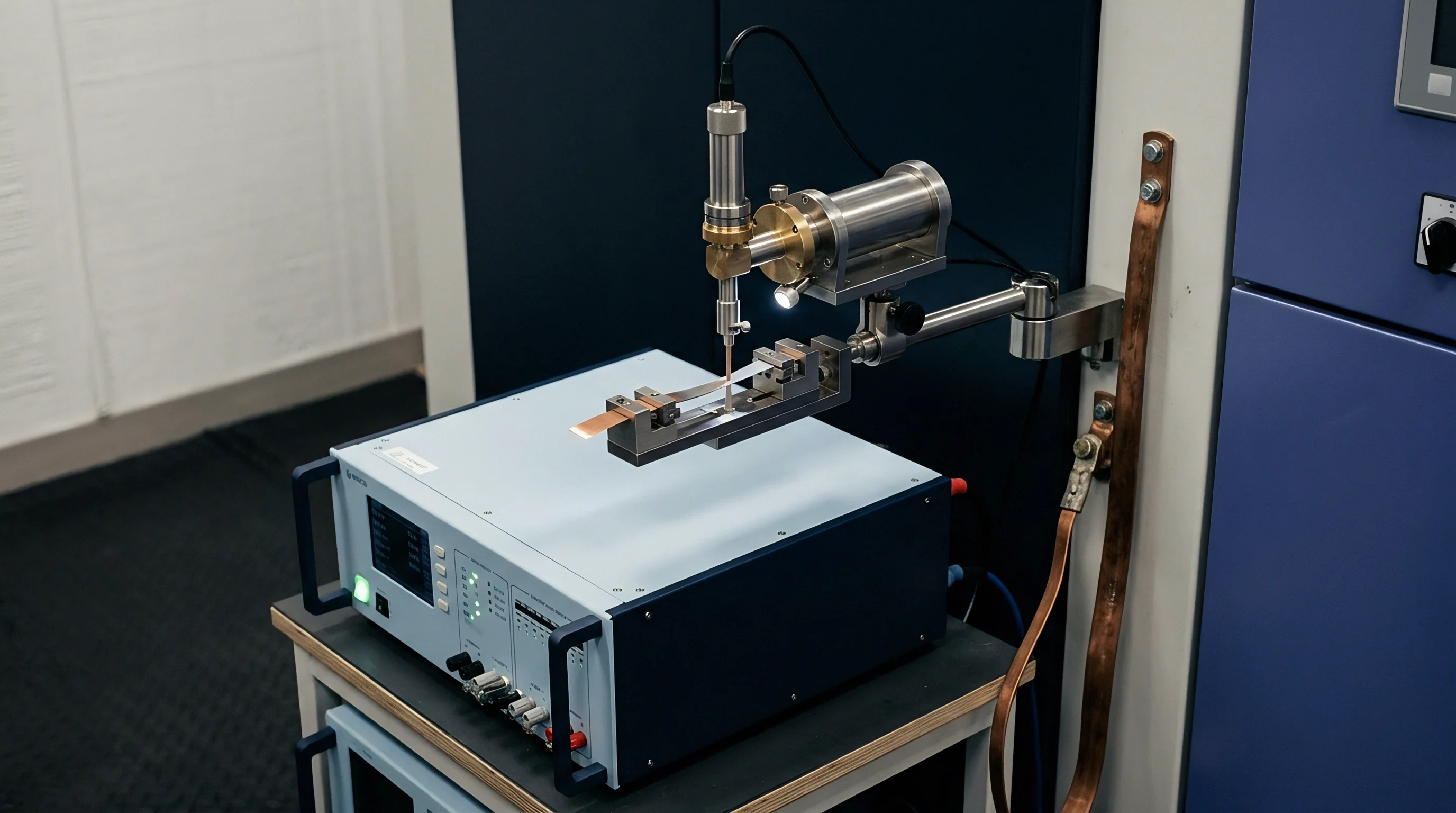
Laboratory evaluation parameters dictate the outcome across the testing sequence. In the T.5 external short circuit test, the laboratory applies a total external resistance of less than 0.1 ohms at fifty-seven degrees Celsius, maintaining the condition until the casing returns to fifty-five degrees Celsius. A standard test run conducted in 2023 on 50-ampere-hour prismatic cells establishes a peak casing temperature of one hundred twenty-two degrees Celsius under baseline thermal dissipation.
If the external resistance drifts to 0.12 ohms due to cable impedance, the peak temperature drops by eleven degrees Celsius, artificially flattening the severity of the thermal excursion. Restricting ambient chamber airflow does the opposite, driving casing temperatures past one hundred fifty degrees Celsius and inducing internal separator collapse.
The assumption that factory state of charge remains stable at twenty-seven percent across thirty days of tropical transit rarely holds up without active monitoring. High ambient humidity and parasitic drain inside integrated battery management boards shift internal charge distributions. A careful buyer specifies direct open-circuit voltage verification at terminal receipt to confirm compliance with the thirty percent state-of-charge ceiling enforced by aviation authorities.


Hold
Movement stops cold when paperwork fails gate inspection. Ground handlers tag the freight, remove the pallets from the active cross-dock staging lane, and transfer the material to a secured dangerous goods isolation bay. Port demurrage calculations begin the moment the barcode scan fails verification against the carrier manifest, leaving pack integrators with secondary liability when stalled paperwork blocks warehouse intake.

Are Component Level Test Reports Transferrable across Integrators?
An assembly plant purchasing bare cells from primary manufacturers cannot reuse the original cell test summary as the sole transport authorization for the completed battery pack. Sub-section 38.3.3 dictates that any pack containing interconnected cells undergoes the complete battery abuse sequence, including vibration, shock, external short circuit, and overcharge. The original cell summary proves cell-level compliance.
The completed pack requires its own discrete test report and matching summary document.
- Incoming Document Verification cross-checks the battery supplier test summary against physical delivery lot numbers before units leave customs control. Mismatched serial prefixes force immediate consignment isolation.
- Technical Boundary Assessment calculates whether packaging modifications alter the mechanical protection of cell terminals. Altered plastic enclosures void pre-existing mechanical shock certifications.
- Destructive Qualification Retesting subjects five newly assembled pack specimens to the full United Nations abuse battery whenever enclosure geometries shift. Testing cycles require four to six weeks of bench execution.
- Carrier File Harmonization submits the newly generated pack test summary to the airline dangerous goods desk forty-eight hours before cargo dispatch. Forwarders obtain pre-flight approval references before drayage trucks depart the assembly plant.
A freight container held for documentation corrections incurs daily retention surcharges that consume the gross margin of a cell shipment within nine days.
Documentation failures trigger operational disruptions across intermodal transfer points. Ocean carriers operating under the International Maritime Dangerous Goods Code enforce Special Provisions 188 and 230. While maritime transport permits standalone cells to ship at higher states of charge than commercial air freight, port authorities routinely refuse containers when container packing certificates lack cross-references to valid test summaries, idling plants that rely on just-in-time delivery.
Testing laboratories issue unique identification numbers. Much as customs officials under early twentieth-century maritime law seized bulk cargo consignments over missing bills of health, contemporary ramp personnel impound multi-megawatt containerized energy storage units over single-digit mismatches in test summary edition numbers. When an airline confronts undocumented cell variants, the cargo moves into bonded hazard storage where daily holding rates compound while administrative clearance proceeds.

Ledger
The financial consequences of unharmonized dangerous goods paperwork accumulate across freight line items, administrative re-filing charges, and facility storage penalties. When an airline rejects a dangerous goods consignment at an international transit gateway, the shipper absorbs the cost of bonded storage, hazardous materials repackaging, ground transport redirection, and independent laboratory file validation. Cargo lines charge premium handling fees for stranded hazardous material.
The financial exposure shows up clearly in a standard delay scenario: an order of twenty thousand 18650 cylindrical cells packed into five hundred master cartons, gross consignment mass of twelve hundred kilograms, stranded at an intermediate transit airport for eleven days due to a model name mismatch between the dangerous goods declaration and the factory test summary.
| Cost Category | Calculation Basis | Daily Rate (USD) | Total Cost (USD) |
|---|---|---|---|
| Bonded Dangerous Goods Storage | Twelve hundred kilograms at $0.85 per kilogram per day | 1,020.00 | 11,220.00 |
| Carrier Administrative Re-Declaration Fee | Flat penalty per rejected airway bill correction | N/A | 750.00 |
| Dangerous Goods Safety Advisor Inspection | Four hours technical review at $220.00 per hour | N/A | 880.00 |
| Carton Re-Labeling And Inspection Labor | Five hundred cartons at $4.50 per unit handling | N/A | 2,250.00 |
| Factory Test Summary Expedited Re-Issuance | Testing laboratory document re-certification surcharge | N/A | 1,500.00 |
| Terminal Demurrage Surcharges | Airport ramp holding fee after forty-eight hour grace period | 450.00 | 4,050.00 |
| Consolidated Ground Disruption Total | Cumulative expense incurred prior to cargo release | N/A | 20,650.00 |
The consolidated loss of $20,650.00 represents a direct penalty of $1.03 per cell across the twenty thousand unit lot. For high-energy cylindrical cells purchased at an original factory price of $2.20 per unit, this administrative delay increases the component landed cost by forty-six percent. The commercial transaction shifts from marginal profitability into a severe financial loss before the goods reach the customer receiving dock.
Regulatory abuse tests determine whether a product variation requires full laboratory re-testing or simple documentation updates. The United Nations framework establishes explicit criteria distinguishing major modifications from minor revisions:
- Mass Alteration Thresholds classify any change exceeding twenty percent of total cell mass as a new design requiring complete abuse re-testing. Changes below this threshold require written engineering justification files.
- Watt Hour Energy Shifts mandate full testing whenever electrochemical optimizations increase nominal energy capacity by more than twenty percent. Cell revisions altering cathode coating thickness without changing casing dimensions still trigger this re-certification threshold.
- Cathode Composition Reclassifications force complete destructive cycling whenever the fundamental chemistry shifts between lithium iron phosphate and nickel-based formulations. Interchanging cell chemistries within identical modular enclosures voids transport documentation.
- Terminal Geometry Variations require mechanical re-qualification under tests T.3 and T.4 if terminal lead placements change mechanical stress profiles. Stress concentrations on internal current collector tabs cause short circuits during high-frequency vibration schedules.
International standard IEC 62133 secondary safety certification does not replace the mandatory United Nations transport testing sequence.
Standard procurement terms incorporating Incoterms DDP transfer all carrier delay penalties and demurrage surcharges directly back to the cell vendor upon paperwork rejection.

Clearance
Cross-border delivery schedules depend on harmonized document structures established during the initial cell qualification phase. Sourcing teams eliminate transport bottlenecks by embedding dangerous goods document requirements directly into the early stages of product development. Engineering changes executed during mass production require continuous synchronization with the external testing laboratories that maintain the master regulatory files.
Procurement teams safeguard freight schedules by tying compliance gates directly to manufacturing milestones, since changes in battery mass shift transport classifications. Factory acceptance procedures must verify that markings on every cell casing, outer carton, and pallet placard match the test summary archival identifier, because carrier desks turn away mismatched or poorly photocopied documentation on sight.
The regulatory environment surrounding lithium battery logistics continues to tighten across international shipping corridors. Civil aviation regulators conduct unannounced spot audits at major air freight hubs, scanning physical cartons and comparing battery chemistry signatures against declared test summary documents using portable spectroscopy equipment. Discrepancies lead to immediate revocation of shipper dangerous goods registration numbers, shutting down export pathways across entire manufacturing divisions.
The question remains whether global civil aviation authorities will eventually mandate direct digital cryptographic links between test house databases and carrier air waybill platforms to eliminate paper summary fraud entirely.