Verification Procedures for UN 38.3 Test Summaries in Air Freight Compliance
Verify UN 38.3.5 test summary lab accreditation, physical model metrics, and 30 percent SOC limits prior to air cargo tendering to avoid stranded shipments.

Docket
Air cargo handlers turn away lithium battery shipments the moment documentation falls short on proof of safety testing. Carriers maintain strict screening protocols at freight acceptance terminals worldwide. Whether cells are shipped loose, packed alongside equipment, or installed inside finished devices, every packaging configuration falls under international dangerous goods transport rules.
The International Air Transport Association Dangerous Goods Regulations, aligned with the International Civil Aviation Organization Technical Instructions, require shippers to supply a valid test summary for every battery design presented for transport.
Carriers and freight forwarders verify compliance against the standardized documentation requirements set out in subsection 38.3.5 of the United Nations Manual of Tests and Criteria. This standard replaced informal manufacturer declarations with a uniform ten-point summary. Without this validated record on hand, ground crews simply will not load cargo onto the aircraft.

Regulatory Mandates for Air Dangerous Goods
Inspectors at origin cargo facilities cross-reference shipping paperwork against dangerous goods declarations under Packing Instructions 965 through 970. Pallets are routinely rejected when cell specifications on outer labels fail to match the accompanying test records exactly.
The regulatory burden falls squarely on the shipper of record. When an air carrier receives a consignment of lithium iron phosphate or nickel manganese cobalt cells, acceptance staff check that model numbers, cell mass, equivalent lithium content, and watt-hour ratings match across all paperwork. Any mismatch between package labels and certified test metrics stops the freight where it sits.
Airlines maintain internal databases to validate incoming paperwork against previously registered cell designs. If a manufacturer modifies a cell’s internal architecture, electrode thickness, or separator material without issuing a revised test summary, carrier compliance systems flag the consignment for physical quarantine.
Ten Mandatory Elements of Section 38.3.5
The United Nations standard mandates ten specific data points within every test summary. Ground acceptance teams inspect documents for each one without exception.
Omissions lead to immediate refusal at cargo check-in desks. The document serves as formal evidence that an accredited laboratory subjected production samples to environmental, mechanical, and electrical stresses without thermal runaway, fire, or leakage occurring.
Section 38.3.5 of the UN Manual of Tests and Criteria requires ten specific data points, and omitting the lab signature invalidates dangerous goods acceptance at air cargo hubs.
Screeners evaluate document structure to verify authenticity before signing off on air waybills, focusing on several key data fields:
- Manufacturer Details verifies full corporate identification, physical facility address, landline phone number, verified corporate email, and active website domain.
- Laboratory Identification matches the accredited testing facility details against international laboratory accreditation cooperation databases to confirm valid testing authority.
- Report Identifier tracks the unique alphanumeric string back to the original master laboratory file generated during destructive test execution.
- Physical Parameters compares mass in grams, cell geometry, and watt-hour capacity directly against physical package labels and safety data sheets.
- Test Standard Revision confirms the test battery followed the specific revision level mandated by current dangerous goods regulations.
Factory quality stamps do not render laboratory verification superfluous for established product lines when lab registration numbers are missing.

Chamber
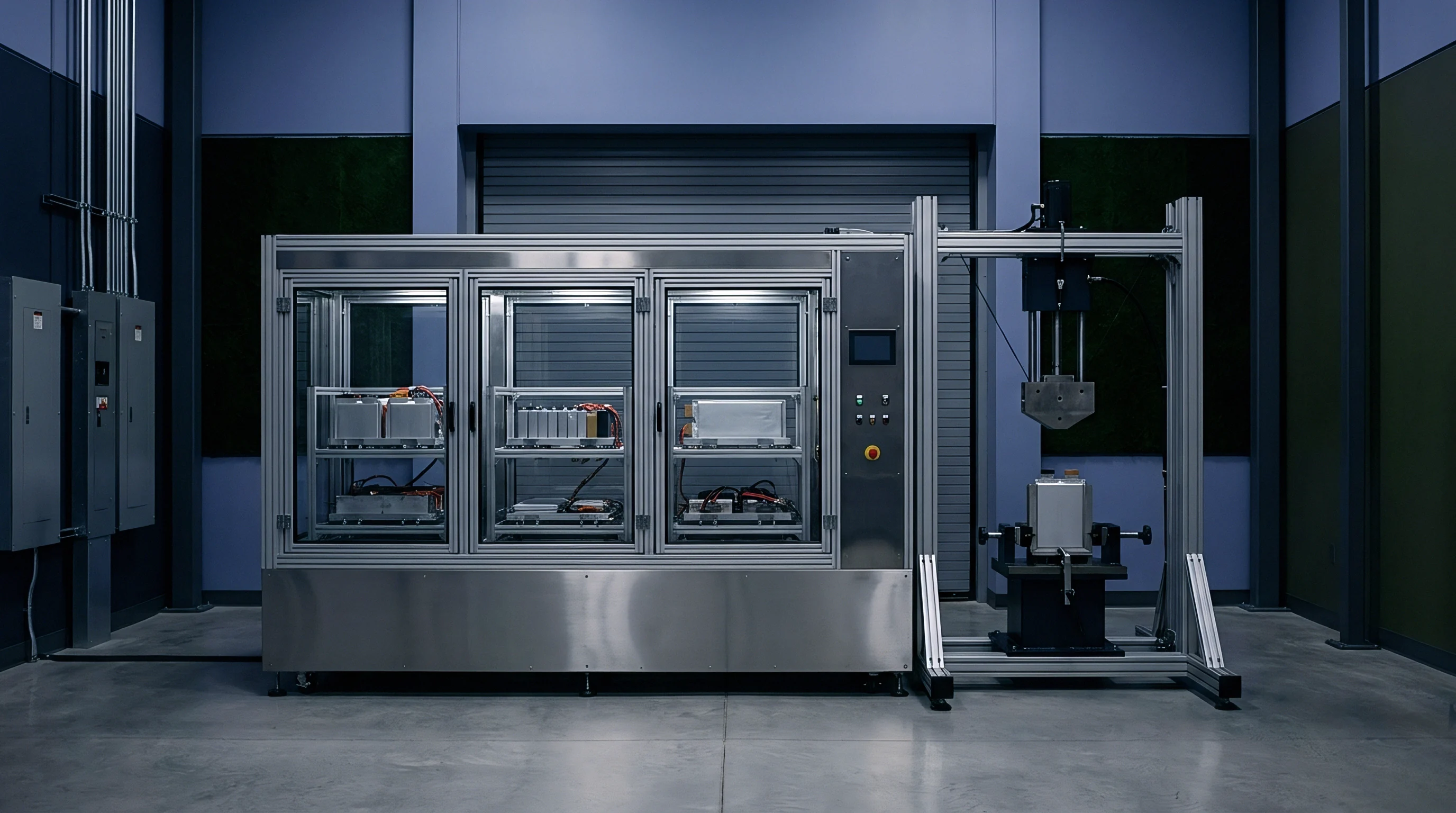
Environmental testing establishes whether a cell design can withstand the pressure differentials, vibration profiles, and thermal swings typical of air transit. The UN 38.3 test regime subjects test samples to eight separate procedures, designated T.1 through T.8. Each targets a specific mechanical, thermal, or electrical condition capable of initiating in-flight thermal runaway.
Testing laboratories run these evaluations sequentially across representative cell and battery lots before issuing a final report.
A single failure during any stage invalidates the entire test lot. After each run, samples are examined for mass loss, open-circuit voltage drop, casing rupture, leakage, venting, disassembly, and fire.

Sub-Atmospheric and Thermal Cycling Protocols
Low-pressure testing simulates the cargo hold at flight altitude. Under procedure T.1, fully charged cells are placed in a vacuum chamber at 11.6 kilopascals or less for at least six hours at an ambient temperature of 20 degrees Celsius. The resulting pressure differential stresses casing seams and seals, exposing flawed crimps or weak welds.
To pass, cells must show no mass loss, no leakage, and maintain an open-circuit voltage of at least 90 percent relative to their pre-test values.
Thermal testing under procedure T.2 subjects samples to rapid temperature swings. Chambers chill cells down to minus 40 degrees Celsius within 30 minutes, holding that point for six hours, then ramp up to plus 72 degrees Celsius for another six-hour soak. Cells undergo ten continuous cycles between these boundaries.
At 55 degrees Celsius under a 1.0C continuous discharge rate, cell internal resistance increases by 18 percent after 200 thermal cycles.
Because transitions between extremes happen in under 30 minutes, the rapid expansion and contraction places severe mechanical stress on internal seals, current collectors, and separator films. Once all ten cycles wrap up, samples rest at room temperature for 24 hours before technicians perform final voltage and mass measurements.

Mechanical Vibration and Shock Endurance Limits
Procedure T.3 uses vibration profiles to reproduce the mechanical agitation generated by aircraft engines and atmospheric turbulence. Test fixtures run cells through a logarithmic sine sweep from 7 Hertz to 200 Hertz, repeating every 15 minutes across three mutually perpendicular axes for a total run time of 12 hours per sample. Rigid mounting fixtures prevent dampening of the acceleration forces.
Mechanical shock testing under procedure T.4 evaluates resilience against abrupt impacts. Small cells receive half-sine shock pulses reaching 150 G over 6 milliseconds, while larger formats are tested at 50 G over 11 milliseconds. Technicians apply three shocks in both positive and negative directions across three orthogonal axes ~ 18 impacts per unit in total.
Structural deformation, electrolyte leakage, or sudden voltage loss constitutes an immediate failure.
Electrical Stress and Overcharge Pass Criteria
Procedure T.5 applies an external short circuit once cells stabilize at 55 degrees Celsius. A low-resistance connection of less than 0.1 ohm is placed across the terminals and maintained until at least one hour after the outer casing cools back to 55 degrees Celsius. To pass, the external case temperature must remain below 170 degrees Celsius throughout the test run.
Internal short-circuit behavior is evaluated under procedure T.6 using either impact or crush testing based on cell format. Prismatic and pouch cells undergo hydraulic crushing up to 13 kilonewtons of force or until a 100 millivolts voltage drop occurs. Cylindrical cells face a 9.1-kilogram drop weight dropped from 61 centimeters onto a 15.8-millimeter bar laid across the cell body.
Case temperatures are then monitored for six hours.
Overcharge resilience for rechargeable packs is checked under procedure T.7, which runs twice the maximum continuous charge current at twice the maximum rated voltage for 24 hours straight. Procedure T.8 tests forced discharge on single cells by connecting a 12-volt direct current power supply in reverse polarity at the maximum rated discharge current. Neither test may produce fire or disassembly during the run or across a subsequent seven-day hold.
A test summary executed on a single prototype cell cannot validate a modified production cathode chemistry without full re-testing.


Audit
Procurement teams need to ensure incoming test summaries match genuine testing performed on the actual production batches being shipped. Counterfeit paperwork remains an issue across global distribution channels, often circulated by gray-market brokers looking to skip the cost and lead time of formal laboratory qualification. Spotting these documents requires systematic checks of lab accreditations, serial ranges, and chemistry specs.
Auditors cross-referencing laboratory signatures against accredited database registries during supplier audits routinely uncover critical discrepancies that off-the-shelf paper reviews miss.

Is a Third Party Test Report Always Required?
Manufacturers are permitted to self-test under UN 38.3 rules provided their in-house facility holds an active ISO 17025 accreditation. However, ground inspectors and carrier safety teams scrutinize self-certified summaries far more thoroughly than reports from recognized third-party labs.
ISO 17025 accredited facilities operate under defined scopes that specify which test methods they are certified to execute. Auditing teams must check that the lab’s accreditation was active on the exact date listed on the test report; an expired scope invalidates the documentation immediately.
Airlines routinely check credentials against databases maintained by organizations like the International Laboratory Accreditation Cooperation. A report tied to an unaccredited lab results in an immediate dangerous goods stop at the airport.
Detection of Fraudulent Summaries and Rewraps
Re-sleeving degraded or B-grade cells in counterfeit wrap is an ongoing problem in unauthorized supply channels. Brokers swap the outer shrink film, print fresh model numbers, and attach legitimate test certificates copied from tier-one manufacturers.
Air carriers inspect incoming documentation against internal dangerous goods databases before loading palletized batteries.
Matching physical cells directly against test documentation helps catch non-compliant product before it enters the supply stream. Screeners watch for several common anomalies:
- Mismatched Serial Ranges identifies discrepancies between production lot codes printed on cell casings and batch reference numbers recorded in laboratory test logs.
- Altered Font Typography exposes forged test summary templates where original text fields were overwritten using graphic design software.
- Unverified Lab Accreditation highlights test summaries referencing non-existent, expired, or out-of-scope ISO 17025 laboratory registration credentials.
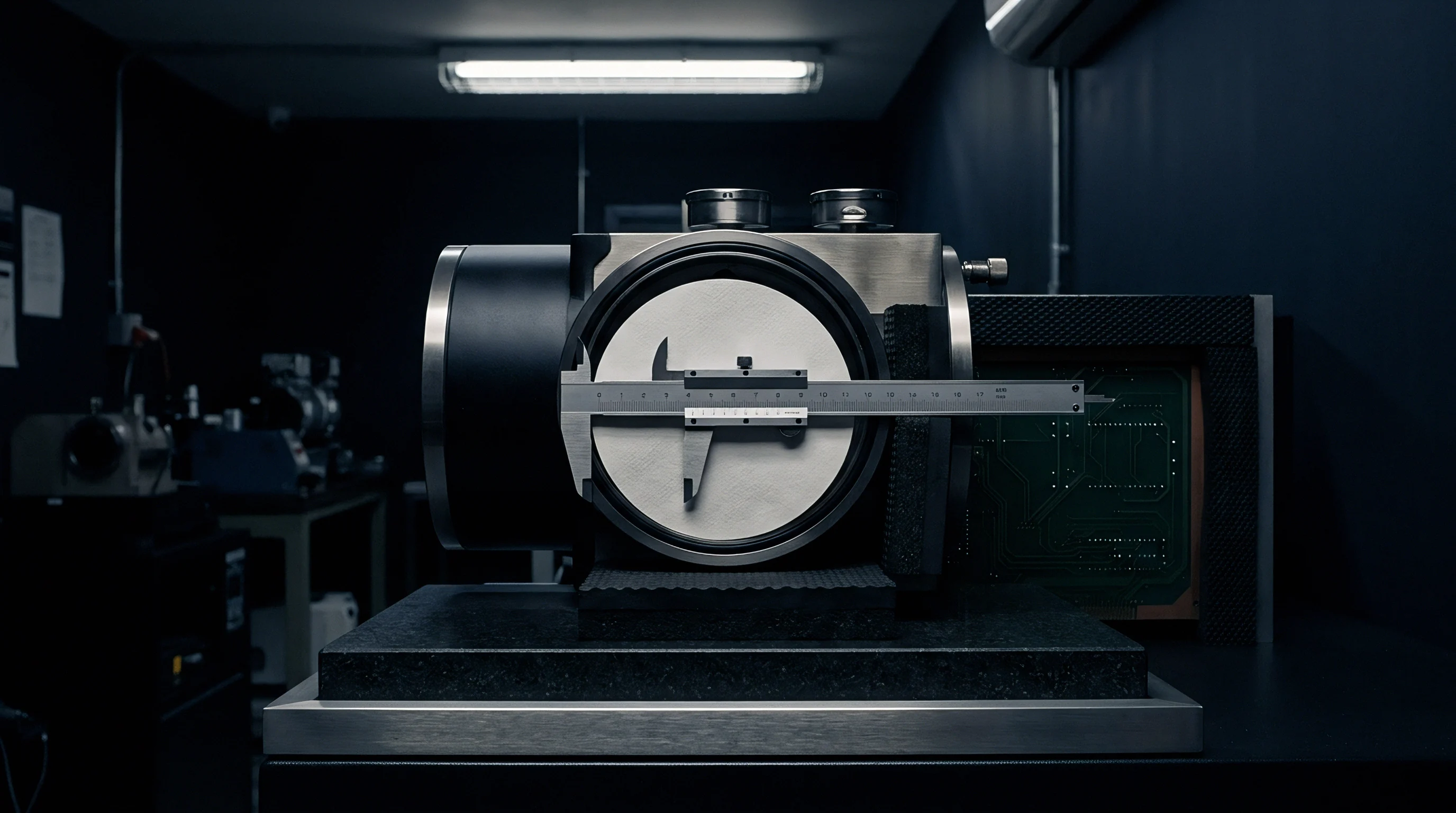
- Dimensional Deviations flags physical height, diameter, or mass variances exceeding nominal manufacturing tolerances stated on engineering datasheets.
Auditors review every test summary against raw cycling logs before issuing shipping clearance. Verification protocols require direct confirmation from the issuing laboratory whenever third-party brokers handle document transit.
Standard commercial agreements incorporating UN dangerous goods rules typically specify that submitting falsified test documents triggers immediate contract cancellation, loss of deposits, and full financial liability for resulting shipping delays.
Dispute
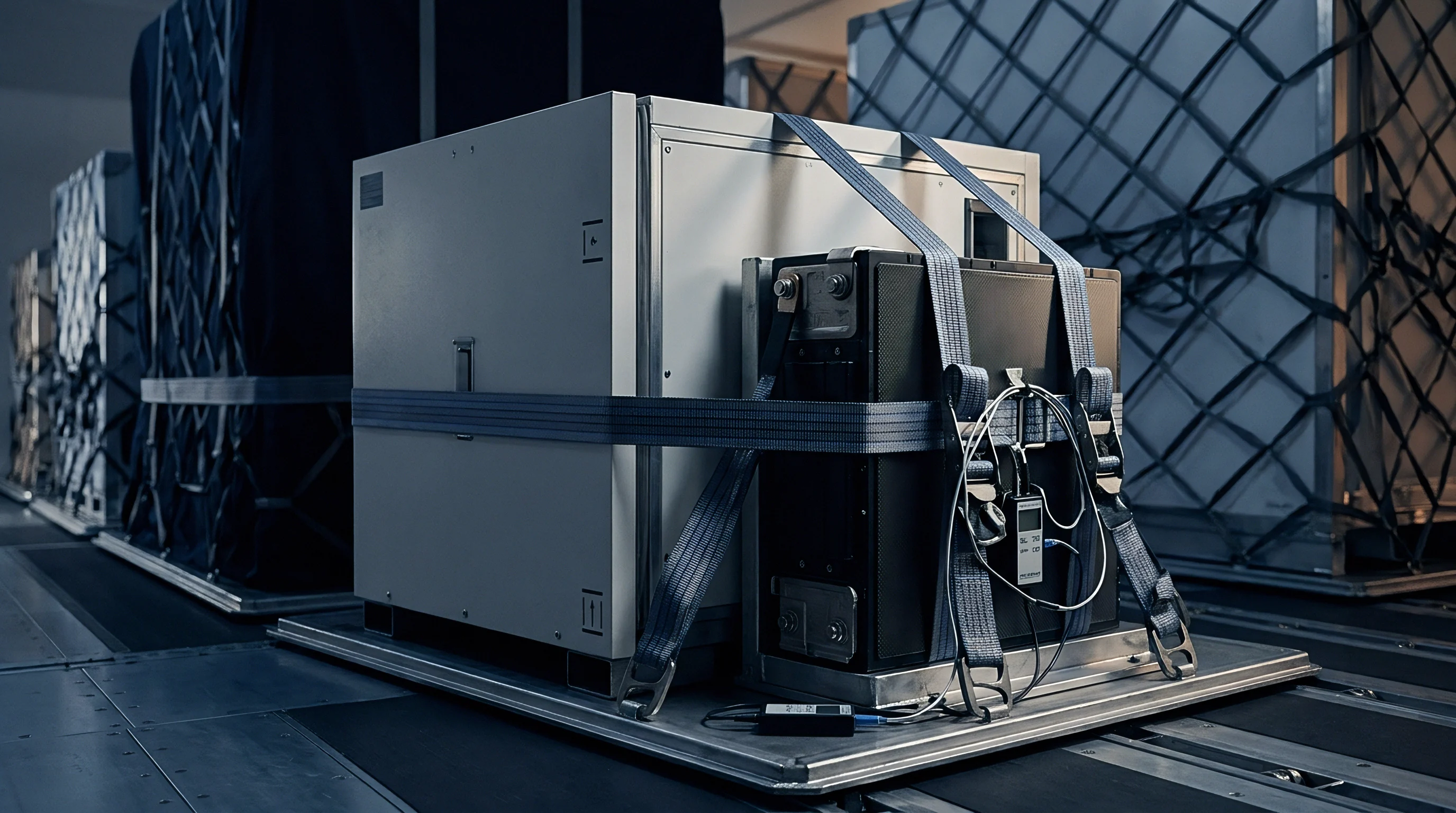
When dangerous goods inspectors reject cargo at an air terminal, holding costs escalate quickly. Forwarders move stalled consignments into dedicated hazardous material vaults while paperwork disputes are resolved. Beyond basic storage rates, shippers face carrier re-booking penalties, administrative fees, and downstream manufacturing delays.
Inspectors examined thirty crates of high-capacity NMC cells at an airport cargo terminal in Frankfurt. Ground screeners halted transit due to missing signatory credentials on the accompanying UN 38.3.5 test summary.
Stranded Freight Post-Mortem at Cargo Hubs
A review of landed costs during documentation holds shows how rapidly administrative errors turn expensive. Demurrage rates inside dangerous goods vaults are significantly higher than standard warehouse tariffs.
Calculating daily demurrage costs when dangerous goods declarations stall shows how storage fees reach $14,200 across five days of tarmac delay at a major European transit hub.